
How we teach

Before your first class
First, you fill in the form and tell us about your goal, your level and the times that suit you for classes. If you don't know your level, you can simply take our free Spanish level test →
Based on your answers, we suggest a course and teachers whose schedule fits yours. For individual classes, you choose your teacher yourself. For pair or mini-group classes, we choose the teacher in advance — and we can always change them if they are not right for you.
If you choose individual classes and you are not sure, we will organise a free 15-minute video call, so you can meet the teacher before classes start.
Our programme
We created all our materials ourselves and have been using them for more than two years. The programme builds up gradually: we don't give you everything at once, but add new things little by little. In each class, we set a specific communication goal — introduce yourself, describe your best friend, talk about your family or how you spent the summer, ask for a pay rise at work, find your way in a new city — and we work on exactly the vocabulary and grammar you need to reach that goal.
Course structure
Each course is divided into blocks of 20 classes, and each block into chapters. Some classes introduce new grammar or vocabulary; others help you consolidate what you have learned and add small but important details. And about every tenth class is a speaking class: no textbook, just real practice of what you already know.
In class
Each class lasts 60 minutes and follows a plan. At the start, you see what you will learn today. First, we warm up with questions about your life or the last class. Then we learn new words — with pictures, not with a list of translations — and read a dialogue or a text, watch a video or listen to audio. Most of the time, you discover the rule yourself: the teacher asks guiding questions and then shows you a table. Sometimes we start with grammar, to make the material easier to understand. Then come written and spoken exercises, role-plays, discussions and short presentations. At the end, we check whether we have reached our goal and whether you can now handle this situation in real life.
A sample class
This is what one of the classes of our A1 course looks like on the course page in Notion, exactly as the student sees it.
Lesson 3. I'm a doctor
What's in this lesson
📚 Reading and vocabulary
— Things around us and at home: libro, móvil, casa, sofá, cama, mesa, televisor
— Numbers from 1 to 10
— Text «¡Hola! Yo me llamo Ivanis»
— Basic verbs: hablar, estudiar, trabajar, vivir, comer, escuchar, practicar
🧠 Grammar
— Review: gender, the articles el, la, los, las and the plural
— Regular verbs in the first person (yo)
— Review of the irregular verbs ser and estar
— Use and conjugation of the irregular verb tener. Age: ¿Cuántos años tienes? — Tengo… años
🗣️ Communication
— Saying hello and goodbye at different times of day (review)
— Saying your age and answering ¿Cuántos… tienes?
— Talking about yourself in the first person and asking ¿y tú?: languages, studies, city, work, food, sport
Calentamiento
How would you say hello at this time of day? How would you say goodbye?

08:00 am
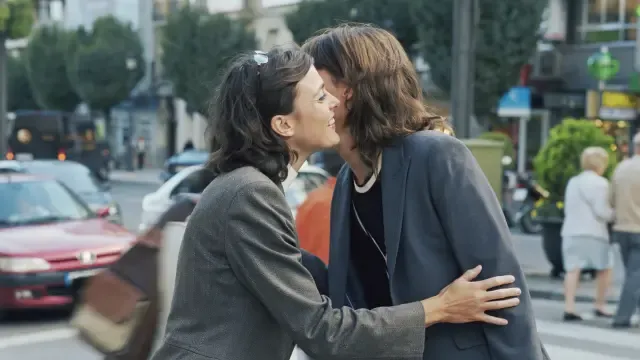
15:00
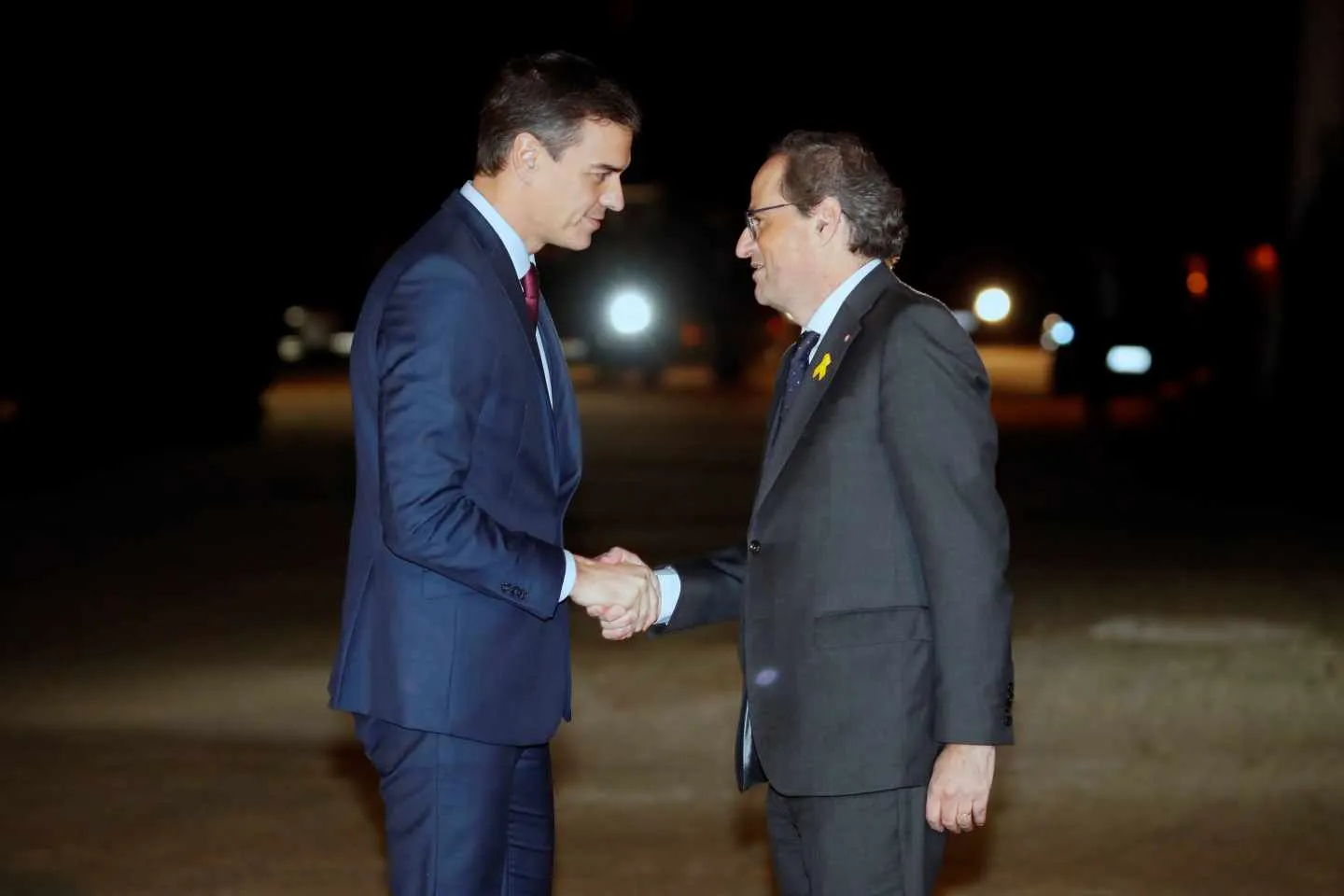
20:00
📚 Vocabulario
Ejercicio 1: Look at the list of words. The emoji gives you a hint about what each one means. Write the word with its article (el / la). Then write the plural (los / las).
Ejemplo: 🍞 pan → el pan → los panes
ESCRITO
- 🍎 manzana → ……………
- 📚 libro → ……………
- 🖊️ bolígrafo → ……………
- 🪑 silla → ……………
- 🧀 queso → ……………
- 🚗 coche → ……………
- 🏠 casa → ……………
- 🍌 plátano → ……………
- 🐶 perro → ……………
- 📱 móvil → ……………
Ejercicio 2: Match each word to the picture. Then say the article: el or la. ORAL
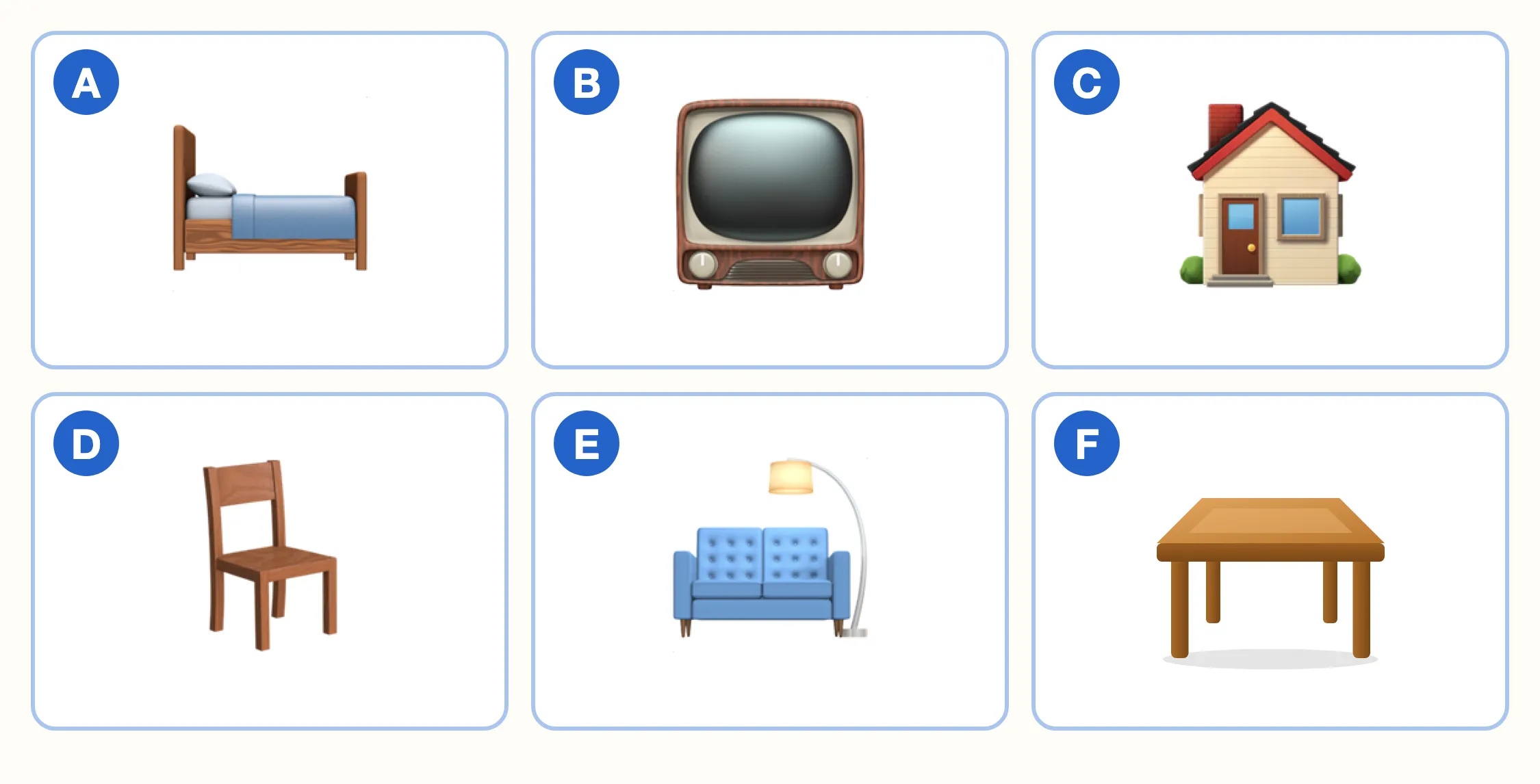
- (C) casa
- ( ) sofá
- ( ) cama
- ( ) silla
- ( ) televisor
- ( ) mesa
Ejercicio 3: Read and remember the numbers from 1 to 10. Then write down the new numbers. ORAL / ESCRITO

🧠 Gramática
Ser
Yo soy de…
Tú eres de…
¿De dónde eres?
Estar
Yo estoy…
Tú estás…
¿Cómo estás?
Tener
Yo tengo…
Tú tienes…
¿Cuántos años tienes?
How old are you?
In English, age is something you are: “I am 28”. But in Spanish, we don't use the verb ser (to be) to talk about age. Instead, we say “how many years we have”. To say that, you need the verb TENER (to have):
I'm 28 → Yo tengo 28 años or Tengo 28 años (in Spanish we can leave out the personal pronoun).
Tener is used not only to say how many years we have, but also how many friends, lessons or apples we have:
Tengo 7 amigos. — I have 7 friends.
Tengo 2 clases de español. — I have 2 Spanish lessons.
Tengo 3 manzanas. — I have 3 apples.
To ask questions like these with tener, we use cuántos (how many):
¿Cuántos años tienes? — How old are you?
¿Cuántos amigos tienes? — How many friends do you have?
¿Cuánto dinero tienes? — How much money do you have?
🔢 ¿Cuántos años tienes?
Ejercicio 4: Say how old you are:Yo tengo … años.
Then ask a classmate:
¿Cuántos años tienes?
🔢 ¿Cuántos … tienes?
Ejercicio 5: Look at the pictures and answer the question in writing. Write the numbers in words. ESCRITO
Ejemplo: 🍎🍎🍎
¿Cuántas manzanas tienes?
👉 Tengo tres manzanas.
- 🍎🍎 manzanas
- 📚📚📚📚 libros
- 🪑 sillas
- 🚗🚗🚗 coches
- 🏠🏠 casas
- 🍌🍌🍌🍌🍌🍌🍌 bananas
- 🐶🐶🐶🐶 perros
- 📱📱📱📱📱📱📱📱 teléfonos
📖 Lectura

¡Hola! Yo me llamo…
¡Hola! Yo me llamo Ivanis. Soy de Cuba, pero ahora vivo 🏠 en Madrid. Tengo 28 años y trabajo como 👨🏫 profesor de español.
En mi tiempo libre escucho música 🎧 y practico deportes ⚽. Estudio 📚 inglés 🇬🇧 y ruso 🇷🇺. Hablo 🗣️ español 🇪🇸, inglés 🇬🇧 y ruso 🇷🇺.
El fin de semana camino 🚶 por el parque.
· ahora — now
· el fin de semana — at the weekend
· en mi tiempo libre — in my free time
Ejercicio 6: Read the text and fill in Ivanis's card. ESCRITO
- Edad (age): …… años
- Profesión: ……………
- Idiomas (languages): ……………
Ejercicio 7: Match the expressions from the text to the pictures. ORAL
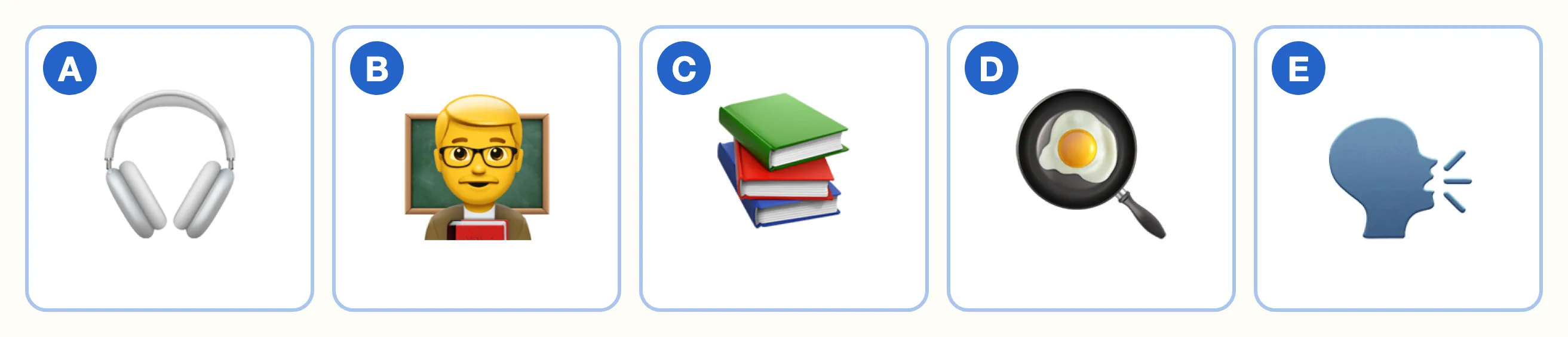
- estudiar
- escuchar música
- preparar la cena
- hablar
- trabajar como profesor
WHAT DO I DO?
Verbs in the first person
Trabajar → Yo trabajo
I work
In English, the verb barely changes: I work, you work, we work, they work. It only changes in the third person: she works. But in Spanish each person has its own ending. And even more interesting: depending on the verb's ending (-ar, -er, -ir), the conjugation can vary.
But for the first person, the ending of the verb (-ar, -er, -ir) doesn't matter: all regular verbs end in -O. Take off -ar, -er, -ir and replace it with -o:
hablar → hablo
comer → como
vivir → vivo
Most native speakers don't use the personal pronoun. Instead of Yo trabajo en Madrid (I work in Madrid), they say Trabajo en Madrid.
TRABAJAR
YO TRABAJO
BEBER
YO BEBO
VIVIR
YO VIVO
Ejercicio 8: Put the verbs in the yo form. ESCRITO
- trabajar → …… yo trabajo
- hablar → …… yo
- escuchar → …… yo
- estudiar → …… yo
- comer → …… yo
- beber → …… yo
- vivir → …… yo
🗣️ Comunicación
Ejercicio 9: Yo… ¿y tú?
Talk about yourself using these verbs. The teacher starts, then it goes round the group: each student answers and asks the next one ¿y tú? ORAL
Modelo: —Yo hablo inglés y un poco de español. ¿Y tú? —Yo hablo inglés y francés.
- 🗣️ hablar:
🇪🇸 español · 🇬🇧 inglés · 🇩🇪 alemán · 🇫🇷 francés - 📚 estudiar:
español · matemáticas · inglés - 🏠 vivir en:
Barcelona · Madrid · Londres · Bogotá - 🧑💻 trabajar en:
la oficina · casa · la biblioteca - 🍽️ comer:
🍎 manzana · 🍞 pan · 🍕 pizza - ⚽ practicar:
fútbol · baloncesto · tenis
✏️ Expresión escrita
Ejercicio 10: Yo. You are going to write a text about yourself. In class, just fill in the plan. Write the text at home and send it to your group chat on WhatsApp. ESCRITO
- Me llamo…
- Soy de…
- Tengo… años.
- Soy… (profesión)
- Trabajo en…
- Hablo…
- Vivo en…
- Estudio…
Cierre: ahora sé…
- say what I do for a living and ask ¿De qué trabajas?
- say how old I am: Tengo… años
- use verbs in the yo form: trabajo, hablo, vivo
- count to 10
- ask ¿Cuántos…tienes? and answer
Deberes
- ✅ Self-check: exercises 1–6 (verbs from photos, numbers 1–10, soy / estoy / tengo, the yo form, ¿Cuántos… tienes?, pero, ahora) · check yourself with the answer key · 21 minutes
- 🎥 For your teacher to check: exercises 7–8 (sentences about yourself, the text «Yo» handwritten and a video on WhatsApp) · 14 minutes
Total: 35 minutes.
📋 Resumen de vocabulario — clase 3
Palabras y expresiones
| Español | English |
|---|---|
| los años | years |
| el bolígrafo | pen |
| el cocinero | cook |
| la escuela | school |
| el fin de semana | weekend |
| el libro | book |
| la manzana | apple |
| el médico | doctor |
| el móvil | mobile phone |
| ahora | now |
| pero | but |
| en mi tiempo libre | in my free time |
Verbos en contexto
| Español | English |
|---|---|
| beber: Yo bebo agua. | to drink: I drink water. |
| caminar: Yo camino por el parque. | to walk: I walk in the park. |
| comer: Yo como pizza. | to eat: I eat pizza. |
| escuchar: Yo escucho música. | to listen: I listen to music. |
| estar: Yo estoy bien. | to be: I am fine. |
| estudiar: Yo estudio inglés y ruso. | to study: I study English and Russian. |
| hablar: Yo hablo español. | to speak: I speak Spanish. |
| practicar: Yo practico deportes. | to practise: I do sports. |
| ser: Yo soy de Cuba. | to be: I am from Cuba. |
| tener: Yo tengo … años. / ¿Cuántos años tienes? | to have: I am … years old. / How old are you? |
| trabajar: Yo trabajo como profesor. | to work: I work as a teacher. |
| vivir: Yo vivo en Madrid. | to live: I live in Madrid. |
Interaction in class
In pairs and mini-groups, the teacher makes sure that everyone speaks for about the same amount of time: both those who learn quickly and those who need a little more time.
Things you need for class
A notebook and a pen are enough: in class, we often write down examples and do exercises by hand. We keep our cameras on — it makes talking easier, and the class is almost like a real classroom.
Pace of classes
The programme is designed for busy people: the pace is calm, and each class builds on the one before. That's why it is important to come regularly and do your homework, which helps you remember everything we have covered.
Homework
After each class, we give you homework that takes 30 to 40 minutes. You check some exercises yourself with the answer key, and the teacher checks the written and spoken tasks — a text, an audio recording or a short video — and leaves comments. Every class has its own Quizlet flashcards, which make it easy to review new words.
Sample homework
The homework for this class is a separate page in Notion.
HOMEWORK · LESSON 3. I'M A DOCTOR
Review
- conjugation of regular verbs in the first person: hablar, trabajar, estudiar, comer…
- numbers from 1 to 10
- the verb tener: age, ¿Cuántos / Cuántas… tienes?
⏱️ Time: about 35 minutes
✅ Self-check
Do each exercise and check yourself straight away with the key underneath.
Ejercicio 1: Look at the photos. What are the people doing?
Write the verb from the box for each letter.
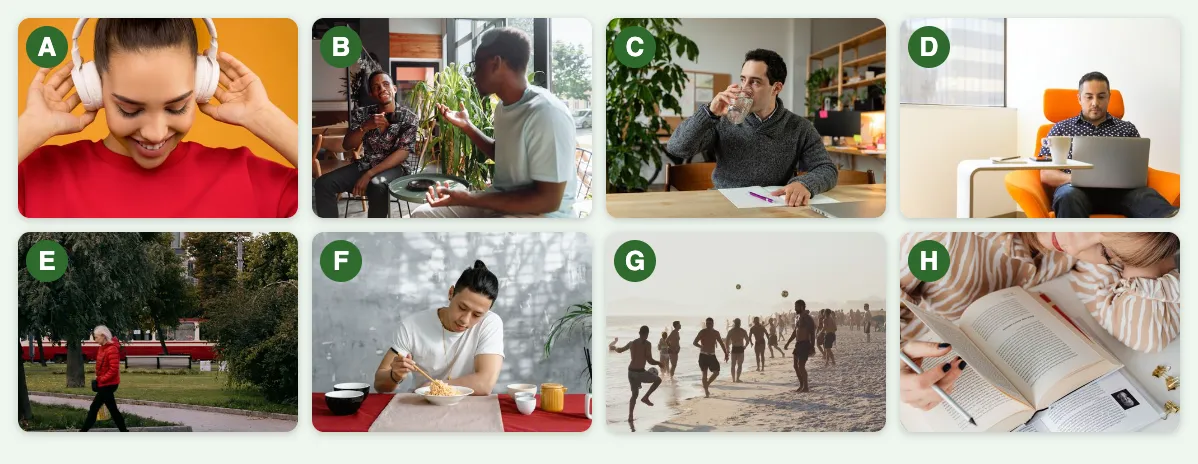
Ejemplo:
A — escuchar música
B — ……………
C — ……………
D — ……………
E — ……………
F — ……………
G — ……………
H — ……………
🔑 Key
B — hablar
C — beber agua
D — trabajar
E — caminar
F — comer
G — practicar deporte
H — estudiar
Ejercicio 2: Write the numbers in words.
Ejemplo:
1 → uno
3 → ………
7 → ………
10 → ………
5 → ………
8 → ………
2 → ………
🔑 Key
3 → tres
7 → siete
10 → diez
5 → cinco
8 → ocho
2 → dos
Ejercicio 3: Fill in soy, estoy or tengo.
- (Tengo) 25 años
- (……) de Inglaterra.
- (……) 30 años.
- Hoy (……) mal.
- (……) profesor.
- (……) dos coches.
🔑 Key
- Soy
- Tengo
- estoy
- Soy
- Tengo
Ejercicio 4: Put the verbs in the yo form.
- trabajar → Yo trabajo
- hablar # idiomas → ………
- vivir en … → ………
- comer frutas → ………
- estudiar español → ………
- escuchar música → ………
- beber mucha agua → ………
🔑 Key
- Yo hablo # idiomas
- Yo vivo en …
- Yo como frutas
- Yo estudio español
- Yo escucho música
- Yo bebo mucha agua
Ejercicio 5: Count the objects and answer the question. Write the numbers in words.
- ¿Cuántas sillas tienes? 🪑🪑🪑🪑 → Tengo cuatro sillas
- ¿Cuántos libros tienes? 📚📚📚📚📚📚 → ……………
- ¿Cuántas manzanas tienes? 🍎🍎🍎 → ……………
- ¿Cuántos perros tienes? 🐶🐶 → ……………
- ¿Cuántos móviles tienes? 📱📱📱📱📱📱📱📱📱 → ……………
🔑 Key
- Tengo seis libros
- Tengo tres manzanas
- Tengo dos perros
- Tengo nueve móviles
Ejercicio 6: Fill in pero, ahora, en mi tiempo libre or el fin de semana.
- Soy de Cuba, (pero) vivo en Londres
- Hablo inglés, (……) no hablo ruso.
- (……) escucho música y estudio español.
- (……) camino por el parque.
- Soy de Inglaterra, pero (……) vivo en Madrid.
🔑 Key
- pero
- En mi tiempo libre
- El fin de semana
- ahora
🎥 For your teacher to check
Ejercicio 7: Finish the sentences about yourself.
- Tengo ……… años.
- Soy de ………, pero ahora vivo en ………
- Hablo ………
- En mi tiempo libre ………
- El fin de semana ………
Ejercicio 8: Yo.
🎬 Watch your teacher's sample video. Write a text about yourself by hand in your notebook, following the plan you made in class (exercise 10). Then record a short video (30–40 seconds) of yourself telling your text and send it to your group chat on WhatsApp.
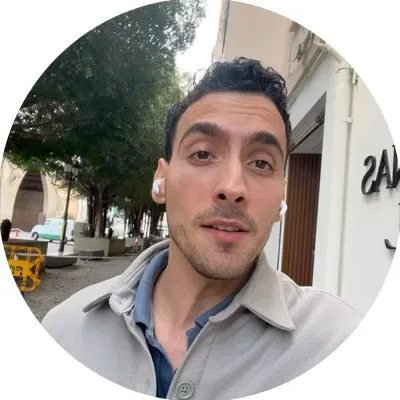
Me llamo Marina. Soy de Inglaterra, pero ahora vivo en Madrid. Tengo 34 años. Soy arquitecta y trabajo en una oficina. Hablo inglés y francés. Estudio español.
Teacher support
We answer questions in the chat within one working day. If you miss a class, your teacher will write to you — not to check up on you, but to see if everything is OK.
Tracking your progress
At the end of each block, you take a test that marks itself, and you see your mistakes straight away, with explanations in English. The A1 course ends with Espanis's own exam, and the courses from A2 to B2 end with DELE preparation and a final exam in DELE format.
Ready to start?
To start, you just need to fill in a short form: we will look at your level and goals and suggest the course, format and teachers that suit you best.